Dooley Noted: 3/25/2016
In this week’s NKT study group, we discussed the highest subsystem in the hierarchy, the deep longitudinal system (SLS).
The DLS is important part of our bipedal movement in gait, particularly the mid-swing to end-swing phase.
The DLS must be cleared before moving on to other subsystems.
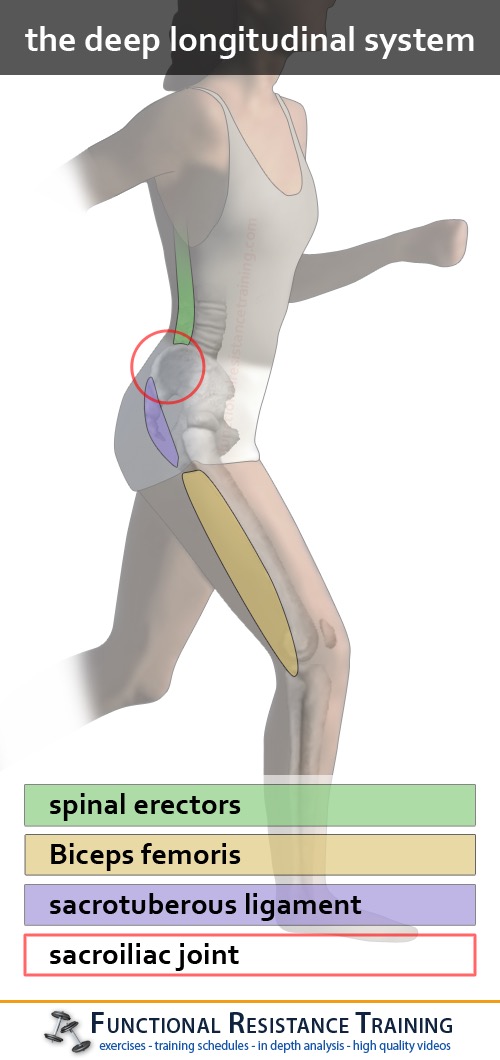
The DLS can be assessed with single leg stance and swinging single leg stance (SLS).
The swinging SLS is used in many systems, from SFMA to NKT to standard gait analysis.
In a swinging SLS, ideal form would involve the following:
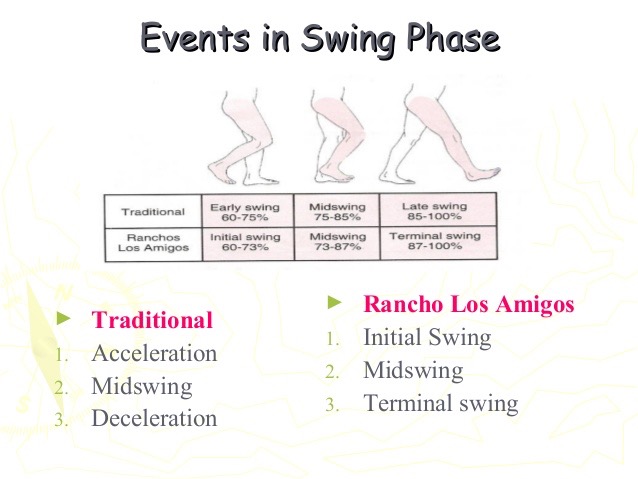
Focus on the upswinging leg from mid-swing to end swing, maintaining knee extension, type two supination (dorsiflexion with inversion), posterior pelvic tilt, and eccentric loading of ipsilateral biceps femoris (long and short heads) and the opposite lumbar erector spinae.
For example:
On Left stance, right upswinging leg:
– Left Lumbar Erectors stretch (eccentrically load)
– Posterior pelvic tilt (hip extensors stretch)
– Right Long Head Biceps Femoris stretches into hip flexion and knee extension
– Right foot supinating and dorsiflexing
The primarily down-regulated and prioritized muscles in the DLS, in this right side example:
1. Right Long Head Biceps Femoris, which is tested in knee flexion coupled with hip extension
– Right Gluteus Maximus may also be tested, although it is more a knee extensor and down regulated in swing to participate more in propulsion.
2. Left side Lumbar Erector Spinae
3. Left side Multifidii Lumborum, as contralateral spinal rotators more than extensors
Common compensators for the DLS may be seen in swinging SLS:
1. Right everting calcaneus (instead of inverting), due to short Peroneals
2. Right knee bend (Short Head Biceps Femoris or Gastrocnemius facilitation)
3. Right Anterior pelvic tilt (iliacus shortening), including right SI joint compression and pain
4. Low back hyperextension (instead of lumbar erectors eccentrically loading)
5. Loading and pulling on right Sacrotuberous Ligament
6. Excessive compensation from left Cervical and Thoracic erector spinae and extensors, due to down-regulated Left Lumbar Erectors and Multifidii
Check these major compensators to override and down-regulate primarily the Long Head Biceps Femoris and opposite side Lumbar Erectors.
Common symptoms of DLS issue:
1. SI joint/ST ligament pain
2. Pulling sensation at sit bone (ischial tuberosity), often deemed Ischiogluteal bursitis.
3. Same side excessive pronation in mid stance and swing phases of gait
4. Chronic knee bend on same side during SLS and/or toe touch
5. Opposite side low back pain and/or same side hip tightness
6. Neck or upper thoracic tightness on opposite side
7. Chronic hamstring strain on same side, with an excessive craving to stretch it. (Don’t let them without your corrections!)
Please associate these relationships and assess appropriately to better help your clients and yourself.
As always, it’s your call.
– Dr. Kathy Dooley